
Homeless Advocates Denounce City Camping Ban
Trending
Local organizations that serve the homeless community made their case during Tuesday's Wheeling City Council meeting as to why the city should put its ordinance prohibiting public camping on hold until a managed camp is established.
After the ban went in place on Monday, the homeless in Wheeling faced fines between $100 to $500 for camping on public property.
No citations have been issued so far by the Wheeling Police Department, according to City Manager Robert Herron during Tuesday's meeting. He noted officers were using "as much discretion as possible" while working with the homeless to have them not violate the ordinance.
"The police department when called will approach those folks who are camping overnight and indicate to them their violation of the ordinance," explained Herron. "Officers are giving them the opportunity to gather their belongings in a reasonable period of time."
Winter Shelter employee Nick Cochran appreciated the discretion officers were practicing discretion when enforcing the ban. However, he noted that "something systematic" had to be done to "support folks that are trying to help people experiencing homelessness."
Cochran stressed shelter employees did not have the time or resources to create a managed shelter.
"This is a very, very difficult time of year for our personnel, not just from an operations standpoint, but from a human standpoint," explained Cochran. "Employees are dealing with their own issues. We're busy working 12-hour shifts to accommodate the folks at the Winter Freeze Shelter, so please find a way to put it on the agenda for next time."
Herron has been working with the heads of local agencies on the creation of a managed camp, which he has the power to approve. No plan for an official, managed public camp has come to fruition.
Councilwoman Rosemary Ketchum acknowledged during Tuesday's meeting the city and community "were not there yet" in regards to creating a managed camp. She recommended the ordinance be put on pause until an official camp is established or until March 15, which is when the Winter Shelter will close.
Highlighting the further harm the ban has caused, Ketchum explained the homeless in the city lack a place to keep valuable items. Since the Winter Shelter does not have a storage space, Ketchum outlined that there is no place for the homeless to store "IDs, birth certificates, family items, photos, anything that they want to keep safe."
Project HOPE founder and physician Dr. William Mercer elaborated on the limitations of the Winter Shelter. Since the building is only open from 8 p.m. to 8 a.m., he noted, for those other 12 hours there is no safe space for the homeless to store their clothes and medicine.
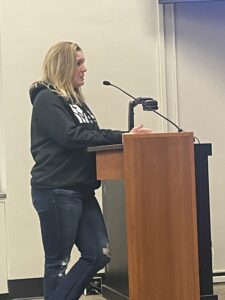
Project HOPE Director Crystal Bauer drew attention to the errors she said she found in the camping ban from a financial perspective when she had the floor.
Noting that jails in the county were "overcrowded and understaffed," Bauer encouraged city council members to "look at the numbers" and determine if it financially makes sense to put someone in jail "just for camping within city limits."
Bauer suggested that the first of the two opioid settlement installments the city received last week worth $727,000 could be "utilized well" for people experiencing homelessness in the area.
"Many of the people that I encounter who are experiencing homelessness were blue-collar workers who got hurt, and they were sold into drug addiction," noted Bauer. "I think that’s a good place to start. I would really, really encourage you to think about dollars and cents here if you can’t think about human life."
As someone who visits camps to provide treatment to ailing homeless people, Mercer noted during his time to speak that the homeless population was "scared to death" about the ban.
"They don't know where they're going to go," added Mercer. "I think we have to have at least some alternative housing or a shelter that could be available for 24 hours."
Catholic Charities West Virginia Northern Regional Director Ashlie Kotson explained at the meeting that Catholic Charities Neighborhood Center owned a small piece of private property where homeless individuals "that aren't fit for the Life Hub" were allowed to camp. At this location, Dr. Mercer has access to treat these individuals and give them medicine.
"Our CEO Mark [Phillips] did send an email to the City Manager before Christmas with some possible ideas on location and some guidelines, but he has not received a response yet," said Kotson. "We would love to work with the city with other agencies to come up with a solution for this to establish a managed plan."
She added that Catholic Charities would "love to sit down and talk" with Herron about ideas regarding the private property homeless individuals are currently using.