
Oglebay Officials Say Deer Hunt Was Effective, Similar Events Possible in Future
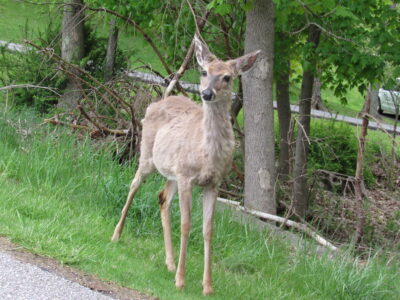 Photo by Shelley Hanson
 Trending
WHEELING -- A total of 16 deer were collected during the recent Limited Purpose Bow Hunt at Oglebay Park. Park officials said the hunt was an effective tool in managing the deer population there, and something they would consider in the future.
The hunt occurred Nov. 6-8 in various sections of the park. Oglebay Vice President of Sales and Marketing Herb Faulkenberry said 16 hunters of the 20 permitted to participate took part in the hunt. Some, Faulkenberry said, experienced scheduling conflicts such as illness, work schedule and daycare issues and were forced to withdraw.
"We want to thank the hunters that participated in this limited purpose bow hunt," said Faulkenberry. "Their respect for the process and desire to do the right thing was evident in both conversation and actions."
Of the 16 deer collected during the hunt, 10 were does, Faulkenberry said. Among the rules of the hunt were that, of the three deer each hunter was permitted to collect, as least one had to be a doe.
The hunters donated 10 of the deer collected to the West Virginia Hunters Helping the Hungry program or the Oglebay Good Zoo. Each hunter also willingly chose to participate in a research project conducted by WVU Extension Services. The park is awaiting the results of several diagnostic tests that were performed to determine the general and nutritional health of the herds.
Faulkenberry commended the hunters, saying they "genuinely care about the health of the herd." He added that the 16 hunters demonstrated that "rules were important" and "wanted the hunt to be perceived in a positive light."
He said that the hunt was effective in helping manage the park's deer population. In announcing the hunt in September, Oglebay said the park's deer population was five times the optimal amount per square mile for the region.
"Any reduction in the deer population is a move in the right direction as we continue the work toward a balanced ecosystem for the park," Faulkenberry said.
The bow hunt was just one part of a long-term strategy to work toward balancing that ecosystem, Faulkenberry said. Park officials want to ensure the long-term growth and health of all its wildlife, flora and fauna.
To that end, Faulkenberry outlined further steps the park will take to manage its deer population. Research is being done now, he said, to find the best methods to desensitize deer from human interaction.
One component, Faulkenberry said, was to add a border collie to the park's team.
"Border collies are particularly well-suited for work in wildlife management and provide a safe diversion to the deer within public areas," he said.
On their methods to curb the feeding of deer at the park, Faulkenberry revealed a park-wide educational program is being developed that includes new signage, flyers and brochures that will help visitors "understand the negative impacts created by hand-feeding any wildlife." Also being equipped with this new information, staff are "asked to engage with guests when feeding is encountered."
"Oglebay does not have law enforcement officers," said Faulkenberry. "However, we do believe that, with education, people will understand and cooperate. For those times where food is dumped in an area for feeding, we will remove those items as quickly as possible."
Since its announcement on Sept. 18, the hunt had received pushback from various sources. Toriseva Law Firm filed an injunction to stop the hunt, but Circuit Judge Jason Cuomo dismissed the petition in October, stating that the petitioners had no standing to bring the case. A change.org petition asking for the hunt's cancellation collected more than 1,000 signatures.
Despite those protests, Faulkenberry affirmed a limited-purpose bow hunt was a method the park would consider again to manage the deer population. He cited the hunt's success as helping Oglebay develop "a high level of confidence in the process."
That confidence came from the "minimal impact" the culling had on the park," he said. Access to the most popular parts of the park were maintained throughout the hunt.
"There was no noise or viewing issues," he noted. "Many in the community even asked when the hunt was going to happen even as it was being conducted."