
Witnesses to Warfare: Wheeling Natives in Midst of Israel-Hamas Conflict
Trending
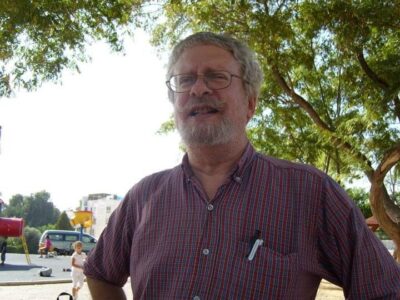
WHEELING -- "Do you hear that?" said Israeli citizen David Farer on the phone Friday. "That's the sound of bombing."
The Wheeling native has lived in Sderot, a city in Israel located on the envelope of Gaza, for the past eight years. He recalled, "One afternoon, the world was one way, and then, just within minutes, everything was totally different."
The current war between Hamas and Israel began when Hamas militants invaded Israel's Southern District on Oct. 7, massacring and setting fire to civilian communities. War has raged in the region since then.
A police station 300 meters from Farer's home was attacked and taken over by the Hamas terrorist group, with Farer recounting "heavy machine gunning" on top of "several stupendous blasts" that shook his house that afternoon.
"My wife and my cat were going bananas," said Farer. "I was a little scared, but I was in the middle of them, so I just had to share that feeling of protection."
When the bombardment began, Farer's house lost internet, leaving him with no idea who was attacking or why until they received panicked phone calls from his wife's family in Germany.
The initial attack on the police station was neutralized by Israeli police blowing up the basement of the building, causing it to "collapse into a mess," described Farer.
"I went around the following day to take photos and saw that there were all kinds of dead people in there and explosive materials," he added. "The police wouldn't let me get too close to it, but I was just shocked because it's a residential area."
To see such catastrophes occur in a town that had "only eight or nine people killed in the last 15 years," according to Farer, was stunning.
Since the start of Hamas's attacks, Farer has witnessed his city shrink from 30,000 to 3,000. Tanks still roam the streets, and planes fly overhead alongside constant artillery fire and bombing.
Now, walking through Sderot, Farer mostly sees stray cats roaming and smells garbage since city maintenance is no longer operational.
"The thing is, you get used to this kind of thing," said Farer. "It doesn't bother me as much because I've been in the army before and seen this."
Some moments stick with him, though, as he recalled strolling past a sight during his first outing since the bombing that he would never forget.
"I was walking by a bus stop and saw some ratty-looking pieces of clothing and shoes," said Farer. "At first, I thought it was just garbage because the city hadn't been cleaned for a while."
Upon closer inspection, Farer realized the clothes were left behind "by a group of six to eight residents" that Hamas forces had gunned down. What struck him in particular about these deaths was that the bodies he found belonged to a group of Holocaust survivors who were taking a day outing to the Dead Sea.
"So, they were sitting around at this particular bus station one morning, and the enemy just passed by them on motorbikes and shot the place up," said Farer. "And nobody happened to notice because you're not supposed to walk or drive around right now."
Apart from the history these deaths carry with them, Farer found the instance "rather a bit of a shock" because "it's just where I go all the time to catch the bus."
Now, whenever he walks through the city, Farer makes sure to "say a big hello" to anyone he encounters who has decided to stay in Sderot. He remarks soldiers often tell him to go back to his house but admits, "You become a little bit crazy staying inside for so long."
"It's not exactly depressing, but when you look around here, there are only a thousand or so who have stayed," explained Farer. "Whenever I do go outside, someone is telling me to go home."
On why he won't leave the city, Farer explained he was "very solidly connected" to Sderot. He does not want to leave the town where he has built not only a relationship with his wife but a business in the soup kitchen he runs.
There are hotels in Jerusalem offered by the Israeli government for Farer and other Sderot citizens to stay in, with Farer saying he "refuses to use that temptation."
"They're offering me, like everybody else, to get a hotel room in Jerusalem," said Farer. "I can't think of any reason I would want to go there because my home is here."
Another Wheeling native, Tamara Sheinman, lives within a mile radius of these hotels. She explained they are now "filled up with over a hundred thousand people."
"I don't like to say these people are displaced because Jerusalem is the safest place to be in right now," said Sheinman. "I am not saying there are never times in the city when we have to run, but ultimately, this is the best place to be in."
Sheinman and her family did have to run on Oct. 7, as they had to flee to their safe room when the town faced rocket attacks.
Since then, life in Jerusalem for Sheinman has returned to "relatively normal."
Recalling her trip to her Rabbi to pray on Thursday, Sheinman said she feels "okay" traveling back and forth in the city,
"You do get a sense that there are fewer people than usual in certain areas of transportation," she added. "There's less lines of transportation and fewer people on the buses, too."
Since she assists with people with special needs, Tamara is still working. She explained that many in the city are without work or have been moved or displaced.
Until Jerusalem can return to normalcy, Sheinman described her home as being filled with not only praying and psalm-singing but also charity.
"It's hard to find someone here now that hasn't received help," said Sheinman. "I have family and friends staying with me on and off, we all have to support each other at this time."
She explained that almost everyone in the country knows someone who has been "killed, taken captive or held hostage."
"It is a very difficult time," she said, "but we move on, we move forward."
Noting that everyone also knows soldiers in the war or people volunteering in the war effort, Sheinman added that two of her sons were called to serve in the Israeli Army.
"There are thousands of people who lived in Israel once who came back to stay here with the Jewish people," said Sheinman. "Most everybody who lives here is connected in some way, so there's a lot of camaraderie we haven't had before.
"It's a whole different element."
In the same way Farer wishes to stroll freely outside his house, Sheinman admits most people in Jerusalem "want their lives to go back to normal."
"Everything has been upside down for many people," said Sheinman. "There's less regularity and calmness, and people want that back."
Before the regularity and calmness return, Sheinman is making an effort to stay in contact with her Wheeling relatives. She explained she has received many messages and well-wishes from friends and family in the city.
One Wheeling local she calls frequently is her brother, Samuel Posin.
On his concerns for his sister and the rest of his family in Israel, Posin said, "Of course, I'm always worrying." His anxieties stem mainly from some of his nieces and nephews living in areas "more prone to anger" along the West Bank.
While talking to his sister after a recent terrorist attack, Sheinman advised him to turn off the television.
"While what is on there is true, it's basically so horrific, if I really concentrated on it, I wouldn't be able to sleep at night," said Posin. "The Israeli philosophy is to keep carrying on as normal in a way to show that the terrorists can't destroy that.
"Terrorists want to upset your lifestyle, and you fight back by not letting them disrupt your life."
Though gunfire rains out outside his door, Farer is also practicing the philosophy of not letting the war disrupt his life. Apart from his walks through Sderot, Farer added he spends his free time "reading lots of Latin poetry and Shakespeare."
"I don't regret having had this experience," said Farer. "Think it might be more interesting to look back on in the future."