
Trending
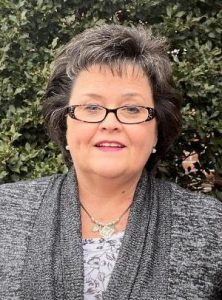
CADIZ - A New Cumberland native is shining some light on the future of the energy industry in Ohio.
Project Manager Lori Cuervo said four solar projects are currently being built in Ohio by her company, BQ Energy LLC. One of those - the 100-megawatt Nottingham Solar - is in Harrison County, located off of Ohio 519, or Stumptown Road, which passes through New Athens.
A 50-megawatt project known as Steubenville Solar will be located on an old strip mine site on Fernwood Road.
Two other 50-megawatt projects are in development, including one located in Columbus on the Swaco Landfill and another in Noble County just south of Cumberland that will be called Recreation Solar,
Cuervo said the Columbus Solar project will be built in 2022 with the remaining Ohio projects, including Nottingham and Steubenville, to be built in 2023.
"We are quite busy," Cuervo said, noting other projects are to be developed in Brooke County, West Virginia, and in Pennsylvania, Virginia, New Mexico, Montana and Texas.
"Nottingham is a little different," she said. "We followed the same generic process for every project whether it's on a landfill or what we call a Brownfield. And BQ Energy specializes in building solar projects only on landfills or brownfields."
The company seeks out sites such as abandoned strip mines, old steel mills including the old Bethlehem Steel site on Lake Erie, and an old refinery that had been reclaimed but still had an environmental issue attached to it. Some other examples include old municipal wastelands and construction sites. The Columbus site, once built, will be the largest solar project on a former landfill in the United States.
"So when we do projects we form special purpose entities that are LLCs just for that project," Cuervo said.
Solar projects built on landfills can be a bit tricky because of the cap, a rubber membrane that covers the landfill, which cannot be penetrated. Cuervo said concrete tubs are laid out and have metal rods installed in them and not the ground, which is called a ballasted system.
The solar panels are attached to a base that never moves, but then a tracker system allows the panels to rotate during daytime to follow the sun. The Nottingham project in Harrison County will be on approximately 580 acres. It and the Steubenville project will be able to tap into American Electric Power with their close proximity to existing substations.
"All of these projects, they would generally be sold into the power grid, so we build the project, produce the power, put it out onto the power grid and it would be ... available for anybody to use," Cuervo said.
For the Ohio projects, power purchase agreements are already in place "where we are selling all of the power to an entity."
Three of the Ohio projects will be fed to PJM, a regional transmission organization named after its original formation involving Pennsylvania, New Jersey, Maryland. It now involves nine other states including Ohio and West Virginia. But an interconnection application that must be filed takes nearly three years for clearance.
Cuervo is a native of New Cumberland and a graduate of West Virginia University, where she studied chemical engineering. Her experience spans coal, natural gas, wind and now solar power. She said it's up to the utility company to determine the price customers will pay, noting there are "community solar" projects where the utility company will sign customers up and provide a discount.
"It's not uncommon for them to save 10 percent off of their utility bills as credits," she said referring to customers but noting none of the Ohio projects is of the community type.
Solar panels are made up of silicon and silver, according to the website greenerideal.com.
"Silver happens to be the element that's most widely used in solar panels because almost all of the energy that's generated from the solar rays which hit the cells can actually be used," according to the site. Cuervo said the lifespan of these panels is 40-50 years, as they will degrade over time.
"It does lose its ability over its lifetime to turn the sun's energy into electricity," she said. "And we look for our projects to have a useful life of at least 40 years."
The cost for solar project developments is information that Cuervo said is not something the company generally shares. But according to a July 2020 Columbus Dispatch article, BQ will spend around $70 million just for the Columbus Solar Park, which will power 5,000 homes.
"The cost to tap into the power grid varies so much based on a number of factors," Cuervo said via email. "The two primary ones are: (1) the amount of space available at the tap location (that is, does the utility line or substation already have enough open MW (Megawatt-peak) space to interconnect your project without significant system upgrades) and (2) the length of the tie line from your site to the interconnection point (tie lines can cost about $1MM (million) per mile). For utility solar projects of our size, it is typical for interconnection costs to be a few million dollars up to $10 million or higher."
When it comes to property taxes, BQ is expected to pay Cadiz $700,000 per year and the three other Ohio projects are expected to generate $350,000 each per year.
"That's a lot of money for a small town," Cuervo noted.