
Trending
CADIZ - A pandemic is demanding time for health officials. But other than times like this, who pays attention to them and the jobs they do?
They're like the eye of a hurricane, working behind the scenes trying to keep things calm while the world goes on around them.
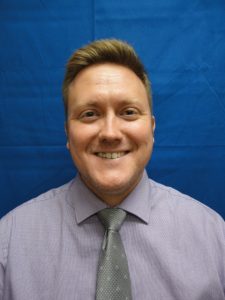
Some, including Harrison County Health Administrator Garen Rhome, see the profession as a calling. A native of Moundsville and a graduate of what is now West Liberty University, Rhome feels a sense of duty served with a side of empathy and compassion.
"It's a top of a bell curve, where empathy and compassion meets science and statistics and those two things working together, a team working together, analyzing those things and coming from a place of compassion, free of judgment," Rhome said. "That's kind of where public health is and that's kind of where we want to be in Harrison County."
Rhome said there's no dynamic impact health officials cause outside of a pandemic when working behind the scenes. They work on community health assessments, analyzing the community and seeing where community members can improve their health.
"So we can base our mission and our programs off of a community health assessment.
Then we take our community health assessment and we turn that into a community health improvement plan where we pull out some of the top issues that we identify in the community, then we focus on our programs on those issues," Rhome explained, adding that they don't see those outcomes for years, maybe even decades.
"We lay groundwork for future health, community health, to live longer and healthier and it is hard sometimes for the public to see that bigger picture," he added.
Attacking opioid use, obesity and prescription drugs requires an assessment conducted every three years.
"So, whatever we identify in our assessment," he said, "we can target our programs to."
When it comes to the obstacles one faces in the field of public health, they can be difficult to frame aside from the COVID concerns for the nearly two years the country has been dealing with the pandemic.
"It's not been our singular focus over the last two years, but it has certainly been our primary focus in public health," he said. "Generally, I think we want to help people have a better understanding of what public health does in a large scope, and of course what public health does under local community, right here at home. Whether it's a small community or a larger urban local community."
One of those obstacles is misinformation, or even disinformation.
"The disinformation is disappointing and the disinformation ultimately can contribute to hospitalization and death if you aren't equipped to make decisions on fact from trusted sources," Rhome said, citing doctors and pharmacists as an example. "But when you know, misinformation or disinformation is allowed to stand alongside trusted, sourced, studied, scientific information, that's when it can become ... deadly."
Rhome called that frustrating but said his department has a mission to carry out, reaching out to the public "where they are" - sometimes physically.
"We want to listen, we want to understand your concerns and then meet you where you are on your ground from your point of view," Rhome said. "It all comes from that non-judgmental compassionate, empathetic place that says, 'We hear you, and we want to continue to work with you. We want to continue to help you.'"
And in the shrinking world and with the ease of travel, is he surprised the world hasn't seen more pandemics to the extent we've experienced with COVID-19? He is not ,because he matches the changing world with the changing science with many bright minds behind the scenes.
"No, I'm not surprised. But we're also talking about the moderness of our science ... talking of epidemiological science to quickly understand a threat, a potential outbreak and offer quick (solutions) that people can use across the globe. Just as quickly as we travel, we also, as a health community, generally, we can react to things.
"There's a lot of smart, thoughtful people always thinking ahead, so I'm not surprised that it doesn't happen more often," Rhome said. "It's a culmination of 150, 200 years of understanding transmissible disease."
When COVID eventually is put to bed, or at least placed in a tolerable, non-headline situation, what questions will the local health departments have to deal with?
"I think we'll find out ... as COVID becomes more endemic, not so much a pandemic, that a few more years into the future, I think we'll find out more about how transmissible it was or how many potential cases we missed and then the so-called long COVID aspects of it."
Rhome said that in time, health officials will find out the importance of their response. But that look into the future to see what was missed or could have been just doesn't exist.
"We cannot get to see into the future, into the crystal ball to see what happens when there is no public health response ... we don’t get to know the alternative future where hospitals were completely overwhelmed. We don’t get to know the alternative future without mitigation efforts where the virus is spread unchecked because we didn't social distance or because we didn't, you know, wear a mask for a certain period of time or at a certain location. We don't get to know that future, and thank God we don't get to know that."
Rhome feels the response shown across the globe was justified and more than likely saved millions of lives during this pandemic.
Rhome doesn't describe surprises in his field as much as the satisfaction of serving the community and knowing he's done something to help people.
"… It is that whatever happens on a given day, start a new program for senior mobility or just work on a budget at the end of the day, it's a sense of accomplishment. You get to go home with a sense of accomplishment.
"Whether people see that every day or not, you know at the end of the day you did work to really benefit the lives of, in this case, 15,000 people ... and beyond that your community whether it's a city, a state or a county."
Rhome began his work in public health in 2008 and continued from there in 2011 with the Wheeling-Ohio County Health Department.
"And it's just that small, rural sense of community and what can you do from a health standpoint in these small southeastern Ohio communities to help out the community," Rhome said.