
Antiques and Collectibles Can Keep You Smiling
Trending
I've always loved clocks. The tic-toc sound is comforting to me, plus the traditional look of an antique or novelty clock adds just the right touch to a mantle, wall or nightstand.
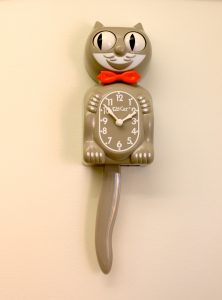
One of my favorite clocks in the collectible world isn't an antique at all -- it dates to 1932 and is known as the Kit-Cat Klock.
Kit-Cat clocks became a nostalgic nod to American history with marketing that has kept the brand visible on the web and in stores everywhere for generations. You can purchase one right here in Wheeling at Glen White's clock kiosk in Antiques on the Market when the shop is open again.
These clocks have such a happy look with big moving eyes and that long ticking tail that every kid and most adults enjoy them. Americana antique enthusiasts find them perfect for their collecting habits because of their uniquely American history and cartoon looking design.
According to the company's official history found online at kit-cat.com or califorinaclock.com, it was in 1932, during the height of the Great Depression, that the clock was invented in a small Oregon town by designer Earl Arnault (1904-1971).
With his signature wagging tail, rolling eyes, and contagious smile, Kit-Cat inspired joy during one of America's roughest patches.
That's easy to see when you watch one of these clocks still available today in either gentleman or lady cat designs. The gentlemen have the dapper bow ties and the ladies have fabulous long lashes and pearl necklaces instead of the ties. Both versions come in a variety of modern colors (even animal spots and stripes) to fit today's tastes.
But the original Kit Cat Klock was a black and white cat that was made with metal parts and was an electrical, corded model with no tie or necklace.
According to the company, the 40s and 50s were decades of explosive growth for Kit-Cat's popularity and marked the first changes in his design. The top paws and the Kit-Cat's dapper bow tie were added.
Then in 1962, production moved to Southern California and the company name was changed to the California Clock Company. In 1982, the owner of the California Clock Company convinced Ohio native and serial entrepreneur Woody Young to take over as president and keep Kit-Cat going strong into the new millennium.
The company's legacy of made-in-America was nearly lost in the 1980s as electric motor manufacturing moved to Asia. Kit-Cat was without a U.S. motor supplier and a battery motor powerful enough to move Kit-Cat's exclusive "one-second" animation had yet to be invented. With no other alternative, the California Clock Company was driven to develop a new battery technology that is used today.
For more information on your Kit-Cat Clock, visit the company website. It is very helpful since it includes a handy "How old is my Kit-Cat clock?" link that describes the various changes over the past 83 years so you can determine age. There's also a "Doctor Kit Cat" link that provides detailed troubleshooting if you have issues with assembly, cleaning or operation.
For comments or suggestions on local treasures to be featured in Antique of the Week, Maureen Zambito can be reached via email at zambitomaureen@hotmail.com or by writing to her in care of the Sunday News-Register, 1500 Main St., Wheeling, WV 26003.