
American as Apple Pie: Collectible Peelers
Antique of the Week
Trending
Fall always includes apples, and what better collectible than an apple peelers from yesteryear?
Apple pie, apple dumplings and applesauce are comfort foods that most of us like, and antique enthusiasts also enjoy the simple machines that once made food preparation easy, like fruit peelers.
There is even an International Society of Apple Parer Enthusiasts that takes collecting these gadgets to a whole new level. These fans of apple peeling machines have studied, inventoried, classified and collected a wide variety of machines that peel fruit.
With a web page (appleparermuseum.com) and newsletter, the society offers friendship and information for those with an unbreakable apple habit.
Today's retailers like Williams Sonoma and Amazon recognize the convenience of these machines and have new versions of cast iron peelers that are bright and beautiful to grab our attention. These gadgets peel, core and slice apples, pears and potatoes.
Apple peeling was essential to our long-ago ancestors who needed apples to survive through winter. Apples were crushed into cider, peeled and sliced and strung to dry for the winter diet and offered a fruit for pies, sauces, apple butter and vinegar. The apple crop in colonial times was vital.
Peeling and preparing fruit became such a big part of the fall ritual that peeling bees were held during which women got together and peeled, cored and sliced in quantity to save the apples for future use. Socializing was part of the work, and games, songs and information were shared while getting the peeling done.
It's easy to see why mechanical help was welcomed by the busy hands that peeled all those acres of fruit. Eli Whitney is credited with one of the first machines, invented in 1778. He was only 13 years old when he invented his apple parer.
Several other early models followed in the late 18th century until Moses Coates of Downing Field, Pa., obtained the first U.S. Patent for an apple parer on Feb. 14, 1803. (See "As the Apple Turns," theantiquesalmanac.com.)
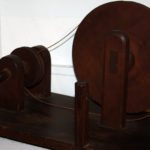
The first peelers were wooden and made with a turning crank on one end turning a fork on the other end that held the apple. The knife blade was mounted to do the paring work.
Early parers like these were handmade and are now rare and valuable. Usually a farmer would copy a design he saw at someone else's farm and perhaps improve the design or alter it a little.
In 1853 the design moved forward to the first practical parer with the blade guided over the apple mechanically with spring tension, leaving the operator a free hand to remove the pared apple and plant a new one, according to apple peeling guru, Don Thornton. He is the author of the 1997 book, "Apple Parers," a 240-page book on the whole juicy history of this machine.
There are several different general types of parers: the lathe type, turntable versions, quick return type and commercial apple parers. Names of note are Goodell, Hunt, Scott, Tripp and others. Many are ornate and attractive. The rare ones are usually the Thompson, the Star and the Climax versions.
Peelers or parers are part of a popular category of antiques -- kitchen collectibles. Other items that enthusiasts enjoy include old egg beaters, mixers, butter churns, nutmeg graters, milkshake mixers, mechanical seeders, ice cream scoops, coffee mills, grinders and advertising.
For comments or suggestions on local treasures to be featured in Antique of the Week, Maureen Zambito can be reached via email at zambitomaureen@hotmail.com or by writing in care of this newspaper.