
Trending
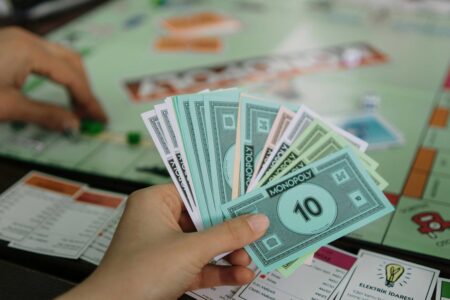
Monopoly has long stood for a certain kind of play. It asks for patience, timing, trade-offs, and a feel for momentum. You build, wait, press an advantage, and try to outlast everyone else at the table. But when operators turn that kind of brand into an instant-play format, the center of gravity shifts. The long game becomes the quick reveal. The question is not whether that version can work. It clearly can. The real question is what this says about the way people now prefer to play.
It points to a wider move in entertainment, where familiar names are being rebuilt for shorter sessions, faster outcomes, and smoother mobile use. In that environment, instant games do more than copy a brand. They translate it into a new rhythm. Instead of planning your next move, you get a result in seconds and decide whether to play again.
At scale, that shift is not small. The World Lottery Association said its latest data compendium recorded $425.8 billion in FY2023 sales across the global lottery and sports betting ecosystem, with money returned to good causes reaching $106.9 billion for the first time. When products operate at that size, changes in format are not cosmetic. They reveal where attention is moving, and what kind of play now feels most natural to large audiences.
Why fast-reveal formats fit the current moment
The growth of online gambling sites can be seen as significant in the context of this article for two reasons: they proved able to put a complex casino game like poker on the small screen of a smartphone and still provide the feel of a casino, and they also capitalized on quick entertainment, as quick as it takes to scratch a card and find out whether you win something or lose.
This must be a familiar experience to many. In digital spaces, speed is part of the experience people now expect. A scratch-style game does that neatly: Tap, reveal, resolve. That is a very different promise from a strategy game, where part of the pleasure comes from planning ahead and living with the outcome of earlier choices.
That difference helps explain why online scratch cards played on casino sites feel so well matched to the wider growth of online gaming. They are easy to understand at a glance, visually direct, and built around immediate feedback. The reveal itself becomes the reward, even before any prize is considered. The format also lowers the distance between curiosity and action. A player can move from interest to play in seconds, and that smooth path matters in a crowded digital market.
This does not mean strategy has lost its appeal. Monopoly still carries value because people recognize it as a game of judgment, risk, and timing. But once that identity is moved into an instant-play setting, what survives is often the brand mood rather than the strategic depth. Now, if an operator takes Monopoly and turns it into something as dynamic and instant as the online scratch, it will definitely attract bigger audiences who simply want to wind down with a game, rather than thinking of money, investment, etc.
Connected categories give digital platforms an extra edge
Platforms that offer online gaming have one more advantage over offline games, which is connectivity of categories. So, you see a post on social media, something similar to this one: https://www.instagram.com/p/DHJM3xNzbrZ/
Alright, you think, that is “Expanding Wild Leprechaun” -- a famous slot game. Then you go to the website of the operator and see the same character extended into a new game that is not even a slot, but a scratch card game: Here. This sense of a gaming ecosystem creates familiarity and boosts the popularity of quick games beyond what traditional, or in the case of Monopoly, paper games could do.
The market signals are pointing toward shorter play loops
The clearest proof comes from how lottery games are changing in Europe. Traditional draw games still make the most money, so they are still very important. But instant games are growing faster, and online use is helping that happen.
In 2024, European lottery groups reported that instant games made €8.98 billion, which was 23.5% of the total, while draw games made €19.31 billion, which was 50.8% of the total. So draw games are still much bigger. But the more important point here is growth.
From 2020 to 2024, instant games grew by 10.3% each year, while draw games grew by 6.1% each year.
What this means for Monopoly-style conversions is fairly simple. Operators do not need instant play to replace strategy everywhere. They only need it to win more of the everyday moments that happen on phones and in quick sessions. On that measure, the numbers point in one direction. Strategy still carries prestige and staying power, but instant design is capturing more of the market’s forward momentum.
Modern attention rewards games that explain themselves quickly
The wider games market helps explain why this is happening. ESA’s 2025 data shows that 60% of U.S. adults play video games every week, and among adult players, 68% say they play to pass the time or relax. That does not describe an audience that has no room for depth. It describes an audience that often wants entertainment to fit around life, not compete with it. In that setting, instant-play versions of familiar brands make a lot of sense because they compress recognition, play, and payoff into one short cycle.
Another sign comes from mobile game data. One 2025 report said that casual games get a lot of clicks, which is a very good sign. The same report found that casual games had average click rates of 9.4% on Android and 8.8% on iPhones.
These numbers are not about lottery games that have seen lots of ups and downs recently, but they still show something important. People like online games that are easy to understand, easy to start, and quick to enjoy.
So, is instant play beating strategy? In many digital contexts, yes. Not because players suddenly dislike thinking, planning, or mastering a system, but because the market increasingly favors formats that deliver satisfaction in seconds. When a strategy icon is turned into a scratch-style game, it is really being translated into the language of modern attention.