
Trending
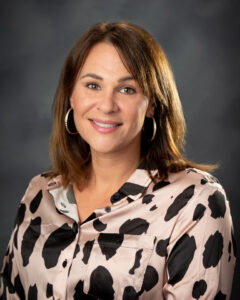
WHEELING - Freshman West Virginia House of Delegates member Diana Winzenreid is looking back on a session she termed "emotional," but was nevertheless successful for her.
"The experience was great. I like the job, and I like the work," she said. "The session was emotionally charged this time because of the issues, and I really like the process."
Winzenreid, R-Ohio, was appointed to the District 4 House seat just last fall to succeed former Delegate Erikka Storch, R-Ohio. Winzenreid is seeking re-election this year.
Despite being the new kid on the block, she wasn't opposed to voting against her super-majority party on a number of issues.
"When I first joined the Legislature, I was given some good advice," she explained. "This is the county's seat, not my seat. You vote first with the district in mind, then secondly for the betterment of state. Then you consider voting with your party, and make sure you can live with yourself."
Winzenreid said she takes her legislative job seriously.
"It's a huge responsibility and I talk to people a lot," she said. "Sometimes a bill is popular with the party, but goes against what the district thinks."
Winzenreid was the only Republican in the House to vote against the Women's Bill of Rights, which would go on to die in the Senate.
Winzenreid explained that, while she agreed with the parts of the bill defining the identity of men and women and girls and boys, she worried how other provisions in the measure would affect her district.
"It wasn't going to stand up. It was already overturned by the 4th Circuit (U.S. Court of Appeals)," she said. "But there are transgender individuals in our district, and I worry about safety for everybody - those people included."
Winzenreid noted that if the measure had passed into law, it would have made it illegal for Wheeling City Council member Rosemary Ketchum - a current candidate for mayor - to use the women's bathroom while performing her elected duties.
Winzenreid also voted against a bill with the intent of strengthening human trafficking laws in West Virginia.
"Who votes against human trafficking?" she asked. "But the realities of the bill made it difficult."
Changes in the law would have made it harder to prosecute parents involved in the trafficking of their children, Winzenreid explained. This was especially a problem as parents often are the ones who introduce their children into many child trafficking cases, she added.
Winzenreid was able to pass two pieces of legislation during her freshman session.
The first was House Bill 4756, which creates an Alzheimer’s plan task force for West Virginia and established the Alzheimer’s Disease and Other Dementia Advisory Council in the state.
Winzenreid pointed toward the Rockefeller Neuroscience Institute at West Virginia University in Morgantown as making groundbreaking progress in treating Alzheimers. Programs there were featured recently in a segment for the "60 Minutes" news show.
"We (West Virginia) are now leading the world for advancements in Alzheimer’s research," she said. "What they are doing there is incredible. "
Winzenreid volunteers locally with Alzheimer's support organizations, and she explained the issue "is near and dear to me."
The Alzheimer’s Association of West Virginia was extremely active in Charleston this legislative session, she continued. The organization brought the idea of creating the task force to her attention.
The second bill passed by Winzenreid was HB 5510, which seeks to clarify state law with regards to witness tampering. It states penalties for crimes against public justice, and local prosecutors had asked Winzenreid to add provisions criminalizing those who "incite a riot."
"I was surprised to find how different viewpoints across the state tend to be," she said. "In Ohio County, we are definitely considered a more liberal area of the state - and it gives others pause.
"We are very conservative here when it comes to government and fiscal responsibility. We believe there is diversity of choice in people's lives - and we are more accepting of individual choices in people's lives."
That makes Ohio County "just different from the rest of the state."
"I love being at the Legislature," Winzenreid said. "It's an incredibly difficult job. You are not representing yourself, but 18,000 people who have differing opinions.
"There is so much work that goes into it, and I like doing the work," she added.