
Orchard Park Hospital Officially Opens in Wheeling, Filling Critical Void
 Emma Delk
 Trending
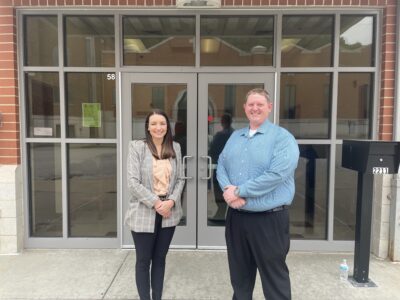
WHEELING -- Orchard Park Hospital opened its doors Monday to children and adolescents needing inpatient acute psychiatric care in the area, with CEO Jacquelyn Knight saying the day has been "a long time coming."
On Monday's opening, the hospital -- located inside the former Robert C. Byrd Child and Adolescent Behavioral Health Center on Eoff Street -- already had two beds filled out of the 30 available. Orchard Park Hospital Administrator Cory Carr added that his phone has been seeing "a lot more use" than typical due to the number of referrals they are receiving.
The first patients accepted were from stakeholders in the local community, such as WVU Medicine Reynolds Memorial Hospital. Carr explained they contacted these organizations first as they knew the "distinct need" they had on top of their "close relationship."
Apart from hospitals in the area making referrals of patients to Orchard Park, comprehensive or mobile crisis units in the state will also refer patients to the hospital.
Even though Orchard Park already had two patients checked in before the end of its first day open, Knight explained they are "starting slow" on intakes. This is due to the hospital not having enough staff to open the second unit of the hospital.
Once open, the second unit will serve children ages five to 12, while the first will serve children ages 13 to 18. Knight said that they were "very fortunate" to house the first age group, as not many child psychiatric hospitals can serve children that young.
"When admitting 17-year-olds, you wouldn't want to take anybody younger than 10 in the same unit because that would be too wide of an age gap," said Knight. "We are fortunate here to have two completely separate wings so that we can separate patients on appropriate age levels."
While they are starting slow on the amount of patients they take in, the referral process to accept patients occurs within only 24 hours. Carr added that the admission for their second intake was a "pretty good turnaround," with the patient being admitted within three hours of their referral.
Being able to accept young patients quickly from local hospitals is important to Carr, as he explained, before Orchard Park opened, the Northern Panhandle "didn't really have an option for child and adolescent psychiatric treatment."
During his prior work in the outpatient sector, Carr said he would often be out "in the middle of the night" trying to find placements for kids.
"I would often be sitting there calling people scared that I would not be able to find a placement," said Carr. "The kid and parents would be getting tired while everyone is getting frustrated."
This lack of available care often left young patients stuck in emergency rooms waiting for a referral. Carr shared that his colleagues in the outpatient sector would have patients waiting in the emergency room for "as long as 55 hours."
"There's an extreme shortage for youth psychiatric treatment in the state because almost no one else is able to take below the age of 10," said Carr. "We're one of the only hospitals able to serve that age group in West Virginia. We're especially needed since the onset of COVID, as that age group has seen a steep incline in the need for hospitalization."
Knight explained that "every day for the last month," Orchard Park has been receiving phone calls about local kids who needed help. She explained it was "heartbreaking" to have to turn patients away before they were open, with Carr referring them to other crisis options or hospitals that could help.
Before Orchard Park's opening, young patients in the area were referred to other West Virginia hospitals in Morgantown, Huntington and Charleston. This added distance from home could often be an added "strain and stressor," explained Knight.
"When you're the parent of a child that needs care like this, you want to be close enough to be involved, do family therapy and visit them when appropriate," said Knight. "If your kid is five hours away, it's hard to do that because you still have a job and other things to take care of."
Carr elaborated that the number one barrier to care of treatment for mental health in West Virginia was transportation. He explained that for youth, this problem can be made worse by the fact that guardians have to follow behind ambulances in their own vehicle to sign their child in at the hospital.
"It's an extreme burden to travel that far and spend gas money just to sign in your child," said Carr. "In the past, a lot of children have been signed over to DHHR custody just for the purpose of getting them signed into a hospital."
The new facility will make "everything run smoother" for the local healthcare system, added Knight, as emergency rooms in the area "won't be as bogged down with clients that they can't place."
"I've had so many contacts reach out to me today saying 'Thank God this is open,'" said Knight. "I can't tell you how you know how good it feels to now be able to provide options for their patients and clients."