
Co-Worker Performs Ultimate Act of Friendship by Donating Kidney
Trending
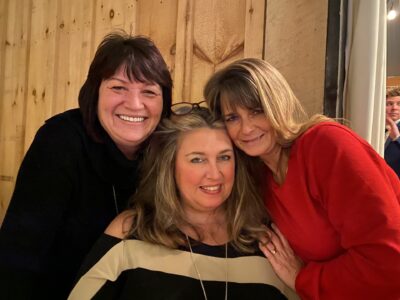
WHEELING -- Susan Klinkoski never dreamed that her longtime co-worker and friend Heather Jones would decide to donate her kidney when she finally needed one.
But she did so without hesitation and was a perfect match.
Jones, a Barnesville resident, and Klinkoski of St. Clairsville are both nurses and have worked together for about nine years at The Health Plan. Klinkoski was her boss for a time, but now they are peers.
"She is an amazing person," Jones said.
Jones said over the years they had talked about Klinkoski's lifelong kidney problems and she knew there would come a time when Klinkoski would need a transplant.
"I always said I would do it," Jones said.
Jones said she knew about the kidney transplant process because she had a friend whose loved one went through it.
Having this information ahead of time made her more confident in her decision.
Klinkoski, Jones said, was given a QR code card that contained a questionnaire for potential donors to take. Jones said she scanned it with her phone, answered the questions and about an hour later she was contacted about being a donor.
She had to undergo blood testing, scans of her kidneys, a 24-hour blood pressure monitoring test, a 24-hour urine collection test and an EKG before being considered a final candidate.
More testing was done at Ohio State University Wexner Medical Center about four days before the procedure was scheduled to happen in 2022.
It was during this time that Klinkoski tested positive for COVID-19. This delayed the procedure until January 2023.
On the morning of transplant day, Jones and Klinkoski happened to arrive at the hospital's entrance at the same time both with their loved ones accompanying them. The women were separated pretty quickly, however, as Jones would have to wait two hours before being admitted to the facility.
However, once the procedure was done they didn't get to celebrate right away.
"I didn't see her until the next morning," Jones said. "It was awful; she was texting that there were complications. She was right down the hall from me. ... I made them take everything off of me. I walked to her room. ... She cried and I cried."
Jones said the complication was related to a blood clot that had formed in a cadaver vein that was used during the transplant. Such a vein had to be used because they used one of Jones' larger kidneys. Klinkoski had to undergo emergency surgery to have the clot removed and the vein repaired.
"It was terrifying," Jones said.
The transplanted kidney, she said, did receive some damage because of the complication.
"My kidney took a hit. It's still functioning better than the two she had prior, but it did affect the outcome," Jones said. "She's still better off than she was."
Klinkoski said she was diagnosed with focal segmental glomerulosclerosis, aka FSGS, when she was 3 years old. She had to undergo testing as a child because she was retaining a lot of water in her body, so much that her belly would swell up and her face would, too. A kidney biopsy confirmed the FSGS diagnosis.
She said her doctors do not know what caused the disease, which causes scarring in the filters of the kidneys, according to kidneyfund.org.
"They always told me it would progress to dialysis or a transplant," Klinkoski said, adding she was close to needing dialysis.
Her symptoms were not necessarily painful, but were chronic and would include swelling and fatigue. She doesn't remember much of the early days and diagnosis, but she does remember her mother driving her to Children's Hospital of Pittsburgh for checkups and treatment.
Fast forward to adulthood and Klinkoski would sometimes talk about her condition with her Health Plan co-workers, friends and family.
Little did she know that one of her long-time co-workers, Jones, the woman who sits across from her at work, would really come to her aid in her time of need.
"I was kind of shocked," Klinkoski said of Jones donating her kidney. "We would talk about it jokingly. Everyone would give upbeat answers.
"But she would always say, 'You know I'll give you a kidney.' People say things, but doing it is something different."
Klinkoski and her family are grateful for what Jones did.
"I don't know where to start. She is a wonderful person and a good friend and a brave soul," she said. "I don't think a lot of people out there would do what she did."
In addition to working together, the women continue to celebrate the successful kidney donation.
"We usually go out to dinner once a month - a girl's night out," she said.
Klinkoski said while the kidney may not be perfect, it is functioning twice as well than it was after the initial surgery. She will be on anti-rejection medicines and immunosuppressants for the rest of her life so her kidney will keep functioning. Her lab visits are getting less frequent now - every other week instead of twice a week.
A side effect of the medicine is hand tremors. And at times her white cell count has been so low that she had to be careful around people in public so as not to get sick.
On a side note, Klinkoski said they did not remove her original two kidneys, which is typical in such a surgery.
The average lifespan of a transplanted kidney is 10 years, which "would be wonderful," she said, though it could last longer.
"There's a chance I'll need a second kidney," Klinkoski said. "I never had to start dialysis and I never had the discomfort that comes along with it."
Klinkoski resides in St. Clairsville with her husband of 25 years, Kevin. They have two children: Kevin, 24, and Keri, 21.
"They were all very supportive. My husband started working at home to support me after this surgery, to take care of me and the house. My son came home for the first month after I was out of the hospital," she said.
Jones said she is doing well and doesn't notice the difference of only having one kidney now. She said it was "rough the first 24 to 48 hours" after the surgery, but she only ended up needing a few days off from work.
Jones said her family, husband Kyle, and children Kovy, 16, and Kali, 12, were supportive of her decision to donate her kidney, though concerned at first.
"They were scared. A lot of friends said I was crazy, but they're not in the medical field. They supported me," she said.
Jones said her family was present when her doctor explained the procedure; she believes this helped them understand and eventually lessen their fears about it.
Klinkoski said at first she did often think about how she had another person's kidney inside of her, but now not so much. However, there was a recent occasion where the women had a good laugh about the whole ordeal.
"We had a long meeting and both went to the bathroom. I said, 'Hey Heather, you're listening to yourself pee now,'" she said.