
Wheeling, One Face at a Time
Trending
By NORA EDINGER
For the Sunday News-Register
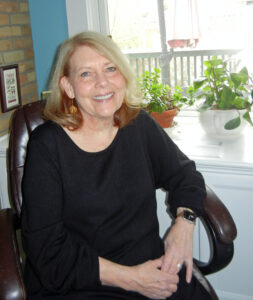
WHEELING -- While many Wheeling residents have seen one of artist Anne Hazlett Foreman's murals somewhere in the city -- and a substantial percentage have something smaller that she painted hanging on a household wall -- few know the story of how very homegrown each canvas really is.
It all started with a rebel nun, a limited art-supply budget and some tidbits of ground beef.
SISTER CECILIA
Foreman learned early that an, "I'm bored," would elicit a piece of drawing paper from her mother, who was managing elements of Foreman's father's medical practice from the family home.
Fast forward a handful of years, and a teenaged Foreman was attending the former Mount de Chantal Academy and was enthralled with a four-year art curriculum girls could add to their college preparatory classes.
The fact it was managed in classic French atelier style by a nun who lost one leg up to the hip in a streetcar accident in Pittsburgh made things all the more exotic. "We were on the third floor, and we could always hear her coming," Foreman said of the thumping of Sister Cecilia Dudas' wooden leg on the stairs.
"She was always in trouble with the other nuns," Foreman remembered of Dudas' eccentric and eclectic ways. The woman often kept injured birds in a small room off the studio. Dudas asked students to bring in bits of ground beef which she cooked up for the birds on a Bunsen burner -- prompting eye rolling around the order.
Dudas' art instruction was pretty much regulation, in contrast. "Almost a whole year, we did black and white -- using charcoal and pencil," Foreman said. While she is now known best for oil and watercolor, these starker media -- along with pen and ink -- remain her preference.
In the second year, Foreman said the girls began working with inexpensive tempera paints before moving on to pricier oils only as upperclassmen. They learned to mix their own colors by doing solid, step-by-step productions of color wheels.
"It was a classic four years. It wasn't art school, but we took it every day," Foreman said. "Sister Cecilia used to say things like, 'Art is 10 percent talent and 90 percent hard work,' and 'You can break the rules after you learn them.'"
BACK BURNER
Foreman did learn the art rules -- even though her years at Wheeling College (now Wheeling University) and what is now Chatham University in Pittsburgh didn't include a major in the subject. And, even though her marriage and subsequent six children kept painting and drawing on a back burner for many years.
When a gradually emptying nest made space for other activity about 25 years ago, she began to volunteer at places such as Independence Hall and the Oglebay Mansion Museum given her passion for preserving old buildings. Art bubbled to the surface nearly immediately as something she could offer.
Foreman did pen and ink works of architectural details at one museum, then the other. The images were turned into notecards for fundraising purposes. And, while she didn't recognize it at that moment, her career as an artistic chronicler of the Wheeling community was born.
Since then, Foreman has created an abundance of murals and smaller works that reflect Wheeling's various eras, particularly its frontier days and Fort Henry.
"I got to know them and appreciated their passion," Foreman said of the re-enactors who gather at Oglebay Park every late summer to celebrate this same time period. For several years, Foreman would extensively photograph re-enactors and then turn some of those images into paintings during the following months.
There were oils and watercolors of Betty Zane, various Native American tribesmen and a variety of early-settler types. Sometimes, the images depicted the re-enactors. Other times, the faces were those of Foreman's family members.
When Fort Henry Days rolled around again, she often gave paintings to the re-enactors who inspired them. But, her work began to get broader notice. Her festival-related work was used for fundraising. She did a trio of historical murals for Wilson Lodge that has since been moved to the Wheeling Visitors Center. She did murals for the Ohio County Public Library.
She and fellow artist James Haizlett were featured in a show called Marking Time at the Stifel Fine Arts Center. Foreman's historic-subject work was also recognized at the national level by the Daughters of the American Revolution in 2008. Her poster entry tied for first place and was copied and sold in an organizational fundraiser.
Foreman continues to sell and take commissions through Artworks Around Town in Centre Market. "The still lifes are the things that are moving," she said of three recent sales.
MANY FACES
Foreman considers pretty much all her work to be portraiture. "Getting a likeness is the same whether you're doing a dog or a house or a person. You have to really observe," she said. "If the space between the eyes or the windows isn't right, you can tell."
How her commitment to this kind of accuracy plays out varies. She paints watercolor images of residential homes in addition to historic downtown buildings. She has done commissioned portraits of people in the past. She continues to do portraits of dogs as part of an unusual tribute to a grandson who died in a car accident in 2014.
"I want people to know about him," Foreman said of doing the canine portraits for whatever donation the purchaser thinks appropriate. An arts endowment in tribute to the late Miles Foreman is one outlet, but Foreman said other charities are also acceptable.
She joked that she just hopes for a good photograph to work from in each case. A "dog in a meadow" doesn't give her an idea of the subject's eye expressions or personality, she mentioned, noting most canine subjects are deceased when the painting is done.
Dogs, houses, historic figures -- Foreman sees her body of work as homage to Wheeling's many faces. "I just want people to be aware, to appreciate what they have," she said.
And, Sister Cecilia's "10 percent talent and 90 percent hard work" quote aside, Foreman said she is comfortable with the fact a fair bit of her work has been shared without pay over the years. "This is a God-given gift," she noted of the talent part. "You see and you interpret."
###