
Trending
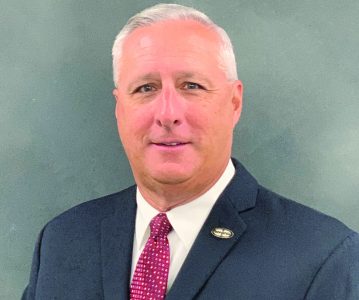
ST. CLAIRSVILLE - Belmont-Harrison Career Center Superintendent Richard Schoene is looking for more - more students and more programs to offer them.
A career-technical education is a great alternative to the traditional high school education for some students. And the Belmont-Harrison Career Center has two campuses where local students can turn, one in Cadiz and the other in St. Clairsville. Schoene said they are thriving, but he and other campus leaders would also like to see more interest from prospective students and more programs.
A graduate of then-West Liberty State College, now a university, Schoene was first interested in athletics and the coaching profession. But after a seven-year stint teaching and coaching in the Marshall and Ohio County school districts, he drifted strictly into the academic side of education for good.
Schoene received two master’s degrees then went to work for Ormet Primary Aluminum Corp. for a period of time before coming to BHCC. He is now in his 28th year at the vocational school and his 12th year as a superintendent.
“We’d like to get more students involved so they can see the value of a career-technical education,” Schoene said.
In addition to courses on its two campuses, BHCC offers programs at three local district sites, pulling in students from St. Clairsville, Shadyside and Barnesville where it does middle and high school programming.
“The big thing is you always have kids that are college bound in high school, so they already have their direction,” Schoene said. “You have the kids who know they want to come to the career center, so they have their direction. But we want to try and figure out how to capture and help those kids that, probably about 25 percent of all high school kids, really don’t know what they want to do.”
Schoene's hope is to get those students into a program where they can see the value of learning something that will put them straight into a job after high school. He also wants to help them understand the different types of careers that are out there.
“How do we get this certain percentage of kids that are undecided in high school in a pathway to be productive in the workforce?” Schoene asked. “And, you know, we have students that migrate away from their career pathways here after they leave, which is fine.”
He understands that just because a young student follows through with an education in a particular field, it doesn’t mean they’ll follow through with that same career path the rest of their life. But Schoene called this an exciting time in the state of Ohio because of the “huge emphasis on career-technical education in the last four years.”
“And that’s only because there’s so many (more) jobs in Ohio, or anywhere for that matter, than there are qualified people,” Schoene said.
His task is to educate and hopefully influence young people in a career path so they can hit the ground running after graduation. Interests vary among young people, so the BHCC staff talks to them about income expectations and career interests as well as opportunities for advancement. He noted how career center students would be coming out of high school with no debt, as opposed to running right into college and coming out potentially with a mountain of debt.
“Career-tech in high schools provides you a pathway that you come out debt-free and go to work immediately, whereas the traditional four-year universities, you build up a lot of debt and it takes several years to recover from that,” Schoene said.
He added that college is still an option after career-tech, and some BHCC students do go on to college. But how does the school steer young students to a technical career?
One way is having plenty of literature in all the area high school guidance counselors' offices. Another is working with those school guidance counselors to promote the career center. A full-time marketing person goes to each high school twice per year, targeting sophomores. They also bring 10th-graders on site for a visitation day to check out several programs they might be interested in.
The BHCC has also been keeping an eye out for new programs.
“We’re always looking how to add programming,” Schoene said.
He said some programs can become frustrating if there is no interest from students. He said there is a huge demand for workers in the heating, ventilation and air conditioning field, for example, but student interest is low.
"So it’s kind of hard to start a program if there’s no interest in the area,” he said.
Other startup programs, such as a senior-only emergency medical technician program, were put on the back burner because of COVID.
And there are other opportunities to piggyback on, such as the job creation that is expected in Licking County when Intel builds its chip-making factory there. Schoene met recently with representatives of Lt. Gov. Jon Husted to learn of the different types of construction and electrical engineers they will need to get the infrastructure in for that project.